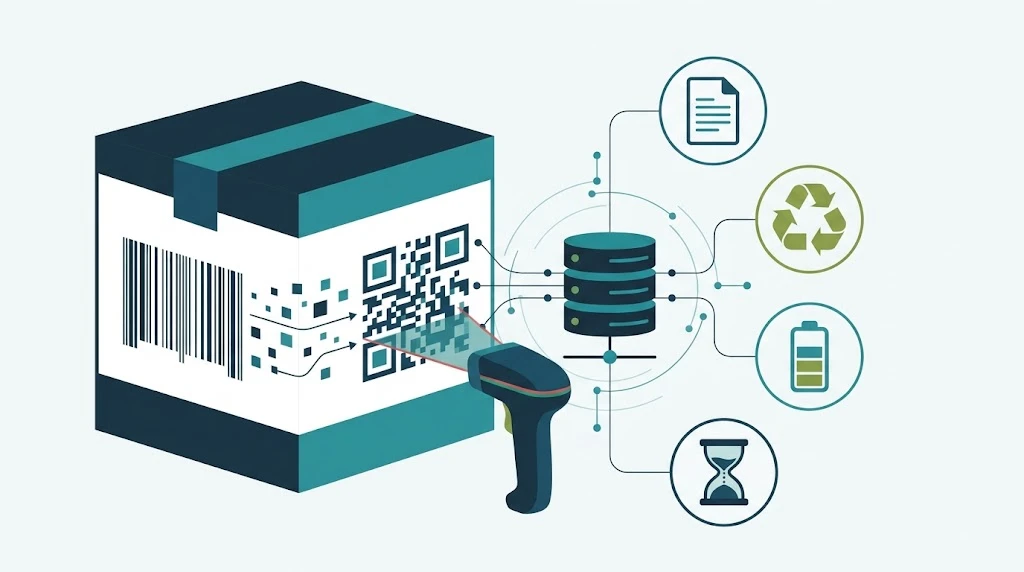
The barcode on packaging is getting company: by the end of 2027, checkouts worldwide should also be able to read 2D codes. The initiative is called Sunrise 2027 and is backed by GS1 and the retail sector. For manufacturers, this is about more than printing. A QR code with GS1 Digital Link connects packaging to online product information and could later also provide access to the Digital Product Passport. This article explains what Sunrise 2027 means and what your product data needs to deliver.
At a glance
- Sunrise 2027 is an initiative by GS1 and the retail sector, not a law: by the end of 2027, checkouts should be able to read GS1-standard 2D codes.
- The traditional barcode will remain in use for now. During the transition, many packs will carry both codes.
- Two types of 2D code are planned: GS1 DataMatrix and QR codes with GS1 Digital Link. In addition to the GTIN, they can contain a batch number, best-before date or serial number.
- A QR code with GS1 Digital Link contains the GTIN within a web address. The same code works at checkout and directs consumers to product information that can be updated without reprinting.
- In Germany, dm and Beiersdorf are testing the technology. According to industry reports, more than 70% of checkouts in Germany and Europe already have suitable scanners.
What is Sunrise 2027?
GS1 Germany describes the goal as follows: all checkouts worldwide should be able to read the new code by the end of 2027. This requires an imaging scanner (imager), which works like a small camera. Manufacturers are not obliged to replace the barcode. Those making the switch early generally print both codes until all their retail partners can process 2D codes.
The value lies in the additional data. A 2D code can carry a batch number and best-before date. Retailers can use this to target recalls more precisely and identify expired goods at checkout. Consumers can access product information using their smartphones.
Facing a PIM selection yourself?
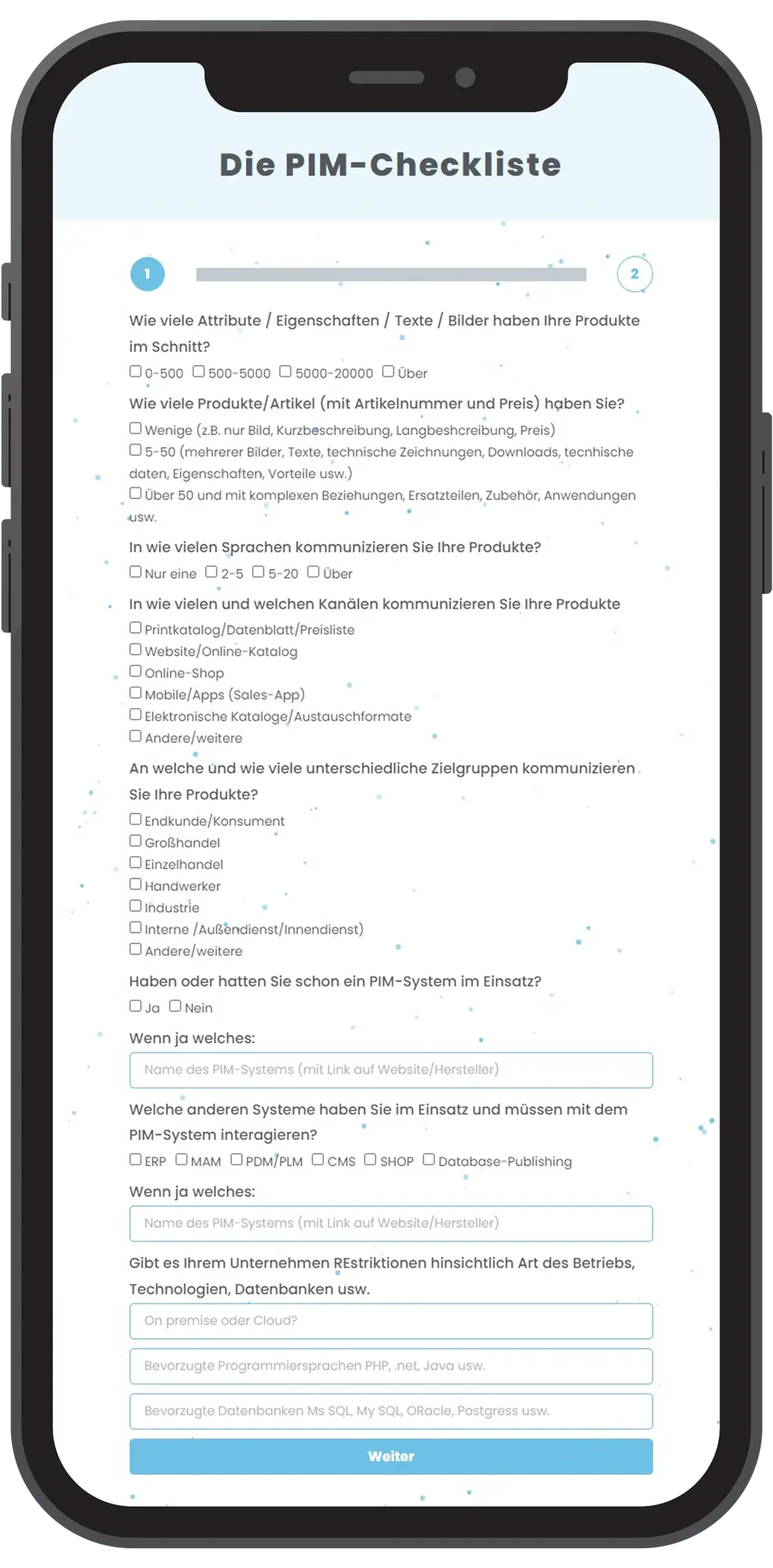
Answer 14 questions in our PIM checklist and receive a personally reviewed shortlist with reasons. Free and vendor-neutral.
Go to the PIM checklist →
What is GS1 Digital Link?
GS1 Digital Link is a standard that embeds existing GS1 identifiers, such as the GTIN, in a regular web address. The GTIN remains valid and can be read at checkout. The same link can deliver different content, such as a product page, instructions, ingredients or recycling guidance, depending on the language and purpose. This requires a resolver that determines where a scan leads. GS1 Germany offers its own service, which is free for certain membership categories.
Early projects in German-speaking retail markets
- dm is testing 2D code processing at checkout in selected stores.
- Beiersdorf is adding GS1 Digital Link QR codes to products including 8X4 deodorants and plans to extend this to other brands.
- According to reports, further pilots are under way at Coop Switzerland, Carrefour, Tesco, Walmart and Woolworths. Nestlé, Henkel, Mars, Procter & Gamble, Dr. Oetker and Rieber are making preparations.
The connection to product and battery passports
For the Digital Product Passport, the EU requires a data carrier on the product through which the passport can be accessed. For the Battery Passport, a QR code is required on all batteries from 18 February 2027. A QR code with GS1 Digital Link can combine checkout scanning, consumer information and the product passport in a single code. Whether this is permitted and makes sense for your product group depends on the relevant legislation.
Take care with environmental claims: since 27 September 2026, using a QR code that merely links to an explanation of an environmental claim has been considered legally risky. Read more in EmpCo: What Product Data Online Shops Need.
What your product data needs to deliver
- GTIN as the key: Every sales unit needs a unique GTIN, accurately maintained in the PIM and aligned with ERP and packaging data.
- Destinations for each link: Which page, document and language should a scan display? This mapping is part of your product data and should flow from the PIM to the resolver.
- Online product information: The content behind the code must be up to date, multilingual and easy to read on mobile devices. This is a core PIM task.
- Batch and shelf-life data do not come from the PIM: This data is generated during production and labelling. Clarify which system writes it into the code.
- Packaging data: The change affects artwork, printing and approval. Link the packaging version to the product in your PIM or DAM.
- Data exchange: Retailers sourcing master data via GDSN or supplier portals expect consistent GTIN and packaging information.
Questions for your PIM vendor
- Can the system manage link destinations by product, language and purpose and pass them to a GS1 resolver?
- How does it connect the product, packaging version and print approval?
- Does it support data models for the Digital Product Passport?
Last updated: 6 November 2026.
Frequently asked questions
What is GS1 Sunrise 2027?
An initiative by GS1 and the retail sector: by the end of 2027, checkouts worldwide should be able to read GS1-standard 2D codes. It is not a law, and there is no obligation to replace the barcode.
Do I have to replace the barcode by 2027?
No. The barcode remains valid for now. During the transition, many manufacturers are printing both codes.
What is GS1 Digital Link?
A standard that embeds the GTIN in a web address. The same QR code is read at checkout and directs consumers to product information that can be updated without reprinting.
What data can a 2D code contain?
In addition to the GTIN, it can contain a batch number, best-before date or serial number, for example.
What does Sunrise 2027 have to do with the Digital Product Passport?
The product passport requires a data carrier on the product, usually a QR code. A GS1 Digital Link code can combine checkout scanning, consumer information and the product passport, provided the relevant legislation permits it.
Sources