What is ISCM?

ISCM: Information Supply Chain Management

In brief: ISCM stands for Information Supply Chain Management. It treats product information like goods: information is sourced, prepared and distributed to customers and channels. The goal is to capture each piece of information once and ensure it reaches every destination accurately.

ISCM and PIM

Traditional supply chain management focuses on the flow of goods from suppliers to customers. Information Supply Chain Management applies this concept to product data. Before a product can be sold, online stores, catalogues and retailers need descriptions, attributes, images and documents. This information originates in many parts of the business and from suppliers. A PIM system is the central hub of this information supply chain, complemented by ERP, PLM and DAM.

The three levels of ISCM

1. Data sourcing

This is where raw data comes together: master data from ERP, technical data from PLM, supplier data, marketing copy and images from photo shoots. Structured data such as attributes sits alongside unstructured data such as data sheets. In the PIM Wiki, this step is called Collection. The article on supplier onboarding explains how to integrate suppliers directly.

2. Data preparation

Raw data becomes sales-ready information. Duplicates are merged (Consolidation), products are classified, copy is written and translated, and media assets are linked (Enrichment). Unlike goods, information changes constantly. Preparation is therefore an ongoing process with clear responsibilities and workflows.

3. Data distribution

The prepared information is delivered to the channels. We distinguish between four types: static, non-digital channels such as printed catalogues, static digital channels such as PDF data sheets, commerce channels such as online stores and marketplaces, and real-time channels such as apps, point-of-sale systems and AI assistants. Find out more under Product data distribution.

An overview of the three levels of Information Supply Chain Management:

Why ISCM matters for businesses

Without a managed information supply chain, businesses maintain the same data multiple times, send conflicting information to retailers and take too long to get new products ready for sale. ISCM makes it clear where data originates, who is responsible for it and where it gets held up. This also provides the foundation for AI: agents and assistants can only work with data that is complete and structured.

Our PIM implementation page explains how to plan a PIM implementation across these three levels. Discover the value it delivers under PIM benefits.

Frequently asked questions

What does ISCM mean?

ISCM stands for Information Supply Chain Management. It means managing the entire journey of product information from its creation to the customer.

What is the difference between ISCM and PIM?

ISCM is the overarching approach to the entire information supply chain. PIM is the central system within it, where product information is collected, enriched and distributed.

Which systems are part of the information supply chain?

Typically, ERP and PLM serve as sources, alongside supplier portals, with PIM and DAM at the centre and online stores, marketplaces, print and data pools as output channels.

How well does your information supply chain work?

Our assessment evaluates architecture, data models, governance and organisational structures across the entire information supply chain.

Request an assessment

Or start with the AI Readiness Quick-Check.

PIM KNOWLEDGE

News & Blog

Any questions?

We are happy to advise you.

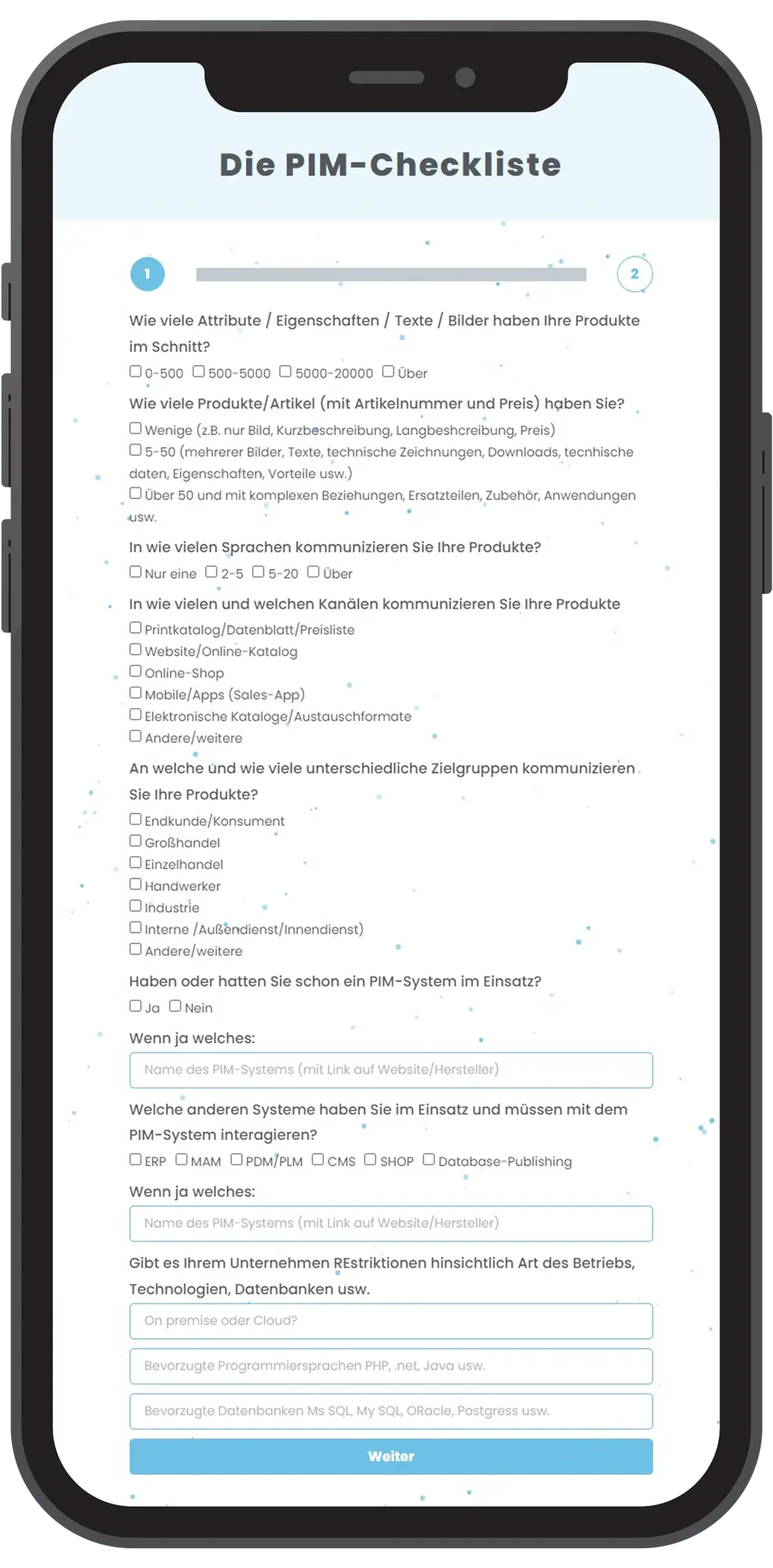
Wait! Have you seen our PIM checklist?

Find out in 3 minutes whether a PIM system could benefit your business and which PIM systems could be right for you!

Webdesign: Deutsche Stadtmarketing