OpenDXP: A rising star in open-source PIM after Pimcore’s licence shake-up

OpenDXP as an open-source PIM following Pimcore's licensing change

OpenDXP: A rising star in open-source PIM after Pimcore's licence shake-up

In 2026, the landscape of enterprise software for managing product information (PIM), master data (MDM), digital assets (DAM) and content (CMS) is undergoing unprecedented tectonic shifts. For medium-sized and large enterprises that relied on genuine open-source systems to orchestrate their digital sales channels, the options have become increasingly limited in recent months.

Now, a promising new contender is stepping into this gap: OpenDXP (https://www.opendxp.io).

The end of the true open-source PIM giants

For more than a decade, two systems dominated the open-source market: Akeneo and Pimcore. These systems offered the architectural freedom needed for complex data models, without the constraints of proprietary vendors. Yet recent strategic developments have fundamentally eroded this ecosystem.

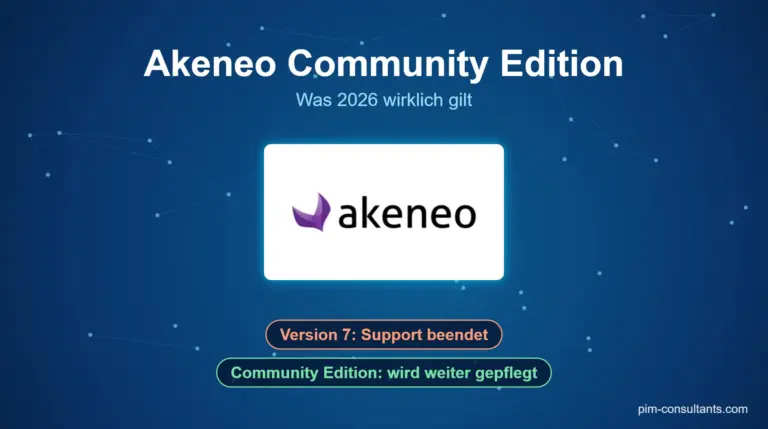
  • Akeneo’s focus on the cloud: Akeneo is concentrating development on its cloud editions. Support for version 7.0 of the self-hosted and PaaS Enterprise editions ends on 30 September 2026. Akeneo continues to maintain the Community Edition, which has followed a rolling release model since 2026, with primarily technical updates.
  • Pimcore’s licence change: Following a $12 million funding round and its alliance with Valantic, Pimcore underwent a far-reaching transformation. With the announcement of version 12, the company moved away from the GNU General Public License v3 (GPLv3) and introduced the more restrictive Pimcore Open Core License (POCL).

The new POCL licence has far-reaching consequences: it prohibits free use by companies with annual revenue of €5 million or more. It also prohibits Software-as-a-Service (SaaS) provision without commercial OEM agreements. Suddenly, the enterprise sector no longer had a high-performance, unrestricted, genuinely open-source PIM system.

OpenDXP: A safe haven goes live

The OpenDXP platform officially went live on 12 February 2026. Initiated by Swiss agency DACHCOM.DIGITAL, it is a community-driven fork of the last fully free Pimcore version, 11.x. OpenDXP guarantees that it will remain under the GPLv3 licence permanently and positions itself as a safe haven for companies seeking to avoid the new commercial restrictions.

Licence models at a glance:

Evaluation criterion

Pimcore version 11.x

Pimcore version 12 (POCL)

OpenDXP version 1.0

Primary licence model

GNU GPLv3

Pimcore Open Core License

GNU GPLv3

Free use

Unrestricted

Up to €5 million in annual revenue

Unrestricted

SaaS provision

Permitted

Prohibited (without an OEM agreement)

Permitted

Integration of GPL code

Unrestricted

Strictly prohibited (code isolation)

Unrestricted

Open-source PIM: OpenDXP, Pimcore and Akeneo compared

Architectural maturity meets continuity

OpenDXP’s technical architecture combines two distinctive qualities: it inherits the maturity of more than a decade of development while establishing architectural independence from the original vendor.

  • Proven foundation: OpenDXP is built entirely on PHP/Symfony, an established enterprise standard.
  • Dynamic data modelling: A key differentiator remains: system administrators define data structures in the browser using drag and drop. The system automatically generates the relational database tables and adapts the editing interface.
  • Data density for power users: While Pimcore version 12 replaces its ExtJS-based backend with the new “Pimcore Studio UI”, OpenDXP retains the classic backend. This not only preserves the exceptional data density that PIM power users need (for example, complex grid views), but also ensures backwards compatibility with established third-party extensions such as the “Process Manager Bundle”.
  • High-performance search: By integrating the advanced-object-search-bundle, the system handles millions of product data records with ease. Elasticsearch or OpenSearch are updated asynchronously via event hooks (such as opendxp.dataobject.postUpdate), keeping response times consistently low for editors.

Convergence: PIM, DAM and e-commerce without silos

OpenDXP’s primary value over standalone point solutions lies in full convergence on a single codebase. Data silos are not bridged by error-prone APIs. They simply do not exist.

  1. PIM & MDM: The system supports multi-level inheritance hierarchies. Changing the material of a base product automatically passes that change on to hundreds of variants.
  2. Digital Asset Management (DAM): The DAM acts as an intelligent engine. Using parameters such as opendxp.assets.image.thumbnails.max_srcset_dpi_factor, the system automatically scales responsive image formats for modern web syndication.
  3. B2B e-commerce: The deeply integrated framework handles complex B2B requirements. It supports multidimensional pricing matrices, tiered discounts and highly specific, separate product assortments for thousands of customer groups (multi-tenancy). Integration bundles for providers such as Unzer or PayPal ensure secure payment processing.

Migration strategies and the growing ecosystem

OpenDXP’s continued existence and development are supported by a strong partner network. The first digital agencies are already publicly stating their position. German agency Viucom describes the fork as a much-needed “new open-source alternative”.

For existing users moving from Pimcore 11, the reality is far less dramatic than a complete system replacement. Since the database schemas are almost identical in design, costly data migration is largely unnecessary. The transition focuses primarily on the code, where dependencies (via Composer) and namespaces need to be rewritten.

Keeping risks in view (SWOT analysis)

Despite the enthusiasm, OpenDXP calls for an honest assessment of the risks:

  • No vendor guarantees: There are no binding SLAs or legal indemnities from a vendor. Responsibility for operations rests with the company using the system and its agency.
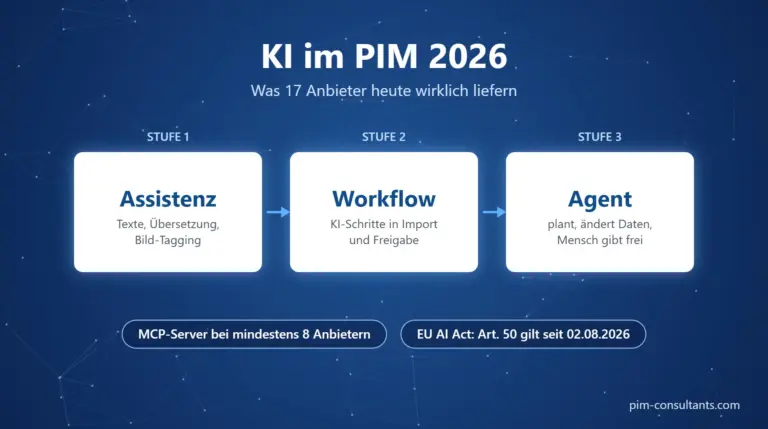
  • Diverging innovation paths: Proprietary innovations backed by multimillion-euro investments in future Pimcore versions (such as AI-powered workflow automation) will not be incorporated natively into OpenDXP.
  • Name confusion: IT decision makers need to take care during vendor selection. The Drupal and Mautic ecosystems have an “Open DXP” movement with the same name, but its primary focus is marketing automation rather than complex product data and e-commerce.

Conclusion: The most rational investment in 2026?

For growing mid-sized companies, wholesalers and manufacturers with revenue exceeding €5 million, OpenDXP is the perfect “drop-in replacement”. Companies that need to support highly complex data models without tying their IT budgets to restrictive licences for the long term will find OpenDXP one of the most future-proof strategic investments in 2026. Its success will now depend on how quickly the European developer community rallies around this new core.

Related topics: Pimcore · Akeneo · AtroPIM · PIM Consolidation Report 2026

Looking for an OpenDXP agency?

Our directory lists OpenDXP agencies and partners in the DACH region, each with their partner status and source. Service providers for the Community and Enterprise editions are listed under Pimcore agencies and partners.

Weighing up Pimcore, OpenDXP and other systems? We provide vendor-neutral support for your PIM selection.

OpenDXP: The new open-source alternative

Discover the impact of recent licensing changes in the PIM market and why OpenDXP is considered a strategic alternative in 2026.

Please leave your contact details to receive the white paper.
We will be happy to provide further information afterwards.

Share this post

More PIM insights

News & Blog

Do you have any questions?

We are happy to advise you.

Wait! Have you seen our PIM checklist?

Find out in 3 minutes whether a PIM system could benefit your business and which PIM systems could be right for you!

Webdesign: Deutsche Stadtmarketing