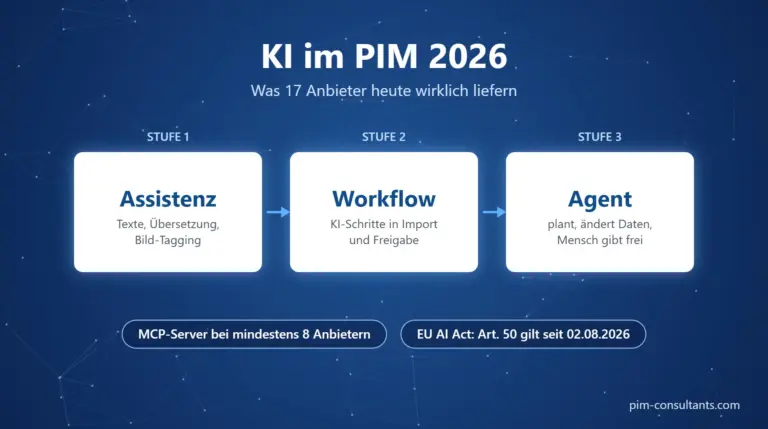
AI in PIM 2026: What vendors actually deliver today
Which AI capabilities PIM vendors actually deliver in 2026: an overview of agents, MCP servers, custom AI models and pricing across 17 vendors, plus obligations under the EU AI Act.

Online, customers shop with their eyes first. In many companies, product data such as item numbers, prices and technical attributes is neatly organised in the PIM system. The associated images, videos and data sheets, however, are scattered across servers, cloud folders and hard drives in the marketing department.
Digital Asset Management, or DAM, is designed to manage these media assets. A DAM system manages images and documents centrally, including versions, permissions and formats. PIM & DAM complement each other: PIM describes the product, while DAM provides the associated media. Only when the two are connected do you have a complete data record that can be delivered to every channel without manual work.
A complete data record. PIM is the source of truth for what a product is: descriptions, attributes and specifications. DAM is the source of truth for how it looks: images, videos and documents. Connected, the two provide a complete product record.
Automatic matching. Instead of uploading images to PIM one by one, the systems synchronise with each other. An approved photo is tagged with the item number in DAM and automatically appears against the correct product in PIM.
The right format for every channel. A DAM system stores the original image at full resolution and generates the variants each channel needs: a large JPEG for the online shop, a square image for the marketplace and a small WebP file for the app.
Define responsibilities. Decide which system is the source of truth for each area. Typically, PIM is responsible for product structure and information, while DAM handles media storage, versions and formats.
Choose a shared identifier. To link PIM and DAM, both systems need to use the same identifier, usually the item number or a unique product ID.
Align workflows. A typical workflow: a product is created in ERP and appears in PIM. At the same time, a placeholder for its image is created in DAM. Once marketing approves the photo, it is linked in PIM and the product can go live online.
“Around a third of marketing staff spend about three weeks a year searching for images, videos and other files.”
Canto, Umfrage unter Marketing-Teams
Without a connection to DAM, PIM remains incomplete. The technical data is there, but the images that sell products are missing or have to be added manually. Connecting PIM and DAM is therefore not a technical gimmick. It is the foundation for ensuring that the right product appears with the right image, in the right format, on every channel.
Would you like to bring product data and media together? Get in touch and we will review your current workflows.
Further reading: DAM in the PIM Wiki · Media Asset Management · 4ALLPORTAL · LaudertMediaPort
Matthias Kant is Managing Director of Digitize! GmbH, the company behind PIM-Consultants. Previously, he worked in marketing for the Independent Aftermarket at Continental and as a project manager and partner at the Droege Group and KMC Marketing Consultants. Today, he provides manufacturers and retailers with vendor-neutral guidance on PIM selection and PIM implementation. More about the team
News & Blog

Which AI capabilities PIM vendors actually deliver in 2026: an overview of agents, MCP servers, custom AI models and pricing across 17 vendors, plus obligations under the EU AI Act.

Has the Akeneo Community Edition been discontinued? No. Support for Akeneo 7 On-Premise and PaaS ended on 30 September 2026. Here are the facts and the five options now available to Enterprise customers.
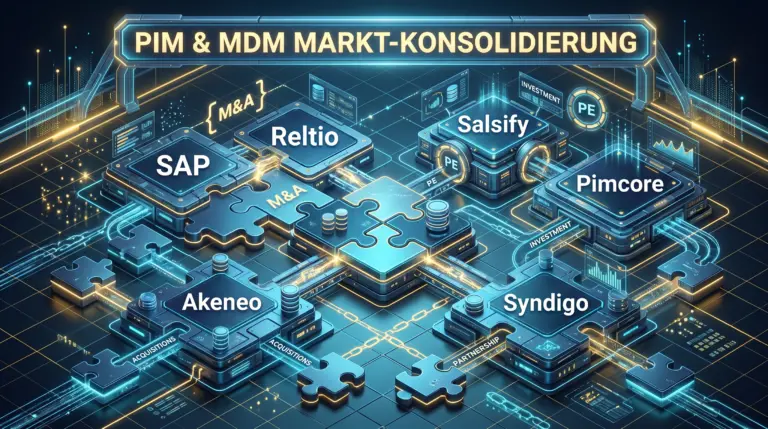
Cinven buys Salsify, Tenzing takes over Pimcore, Akeneo acquires PricingHUB: an overview of all PIM deals in 2025/2026, the three patterns behind them and what users should now look out for in their contracts.

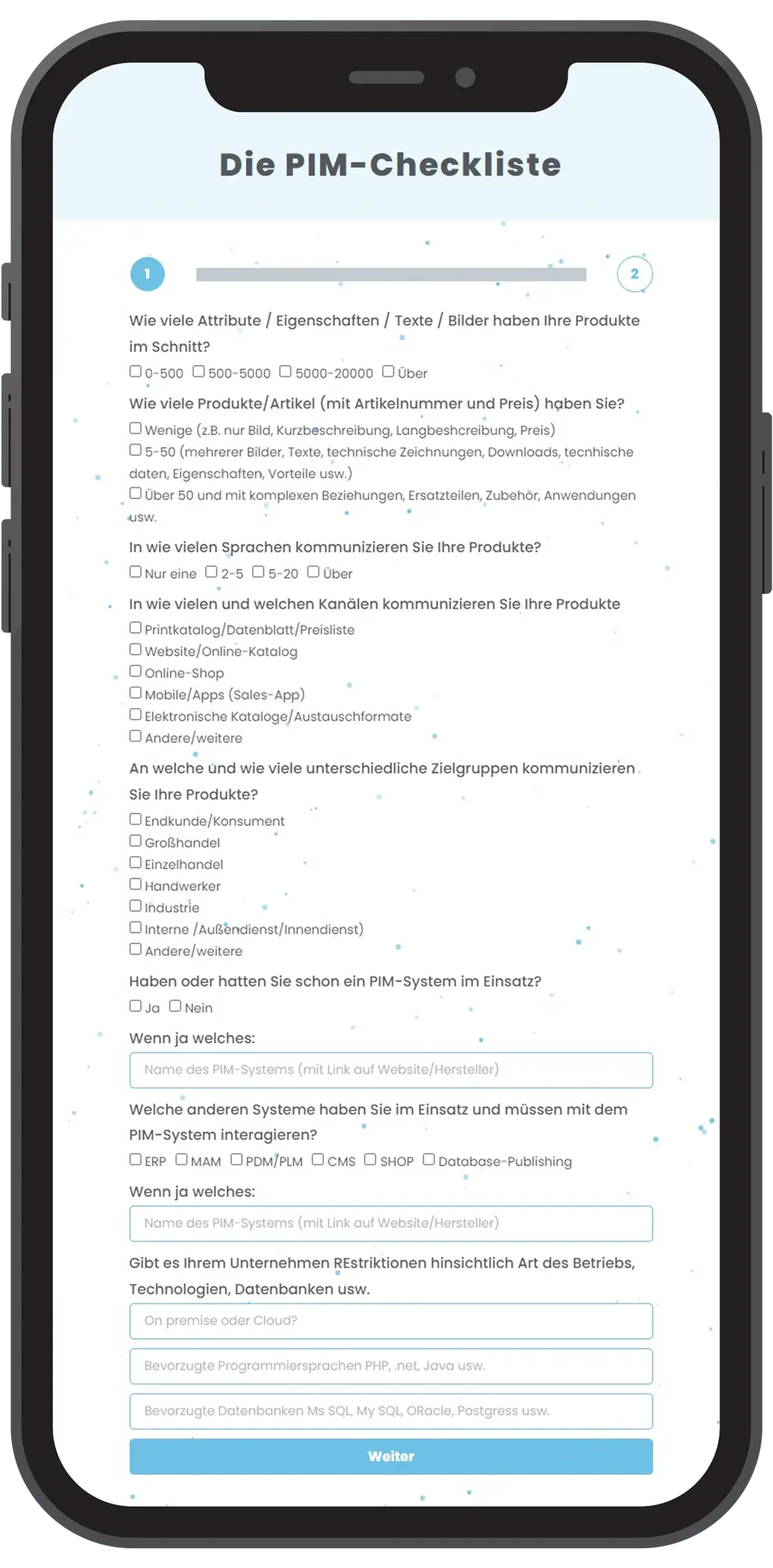
Find out in 3 minutes whether a PIM system could benefit your business and which PIM systems could be right for you!
Webdesign: Deutsche Stadtmarketing