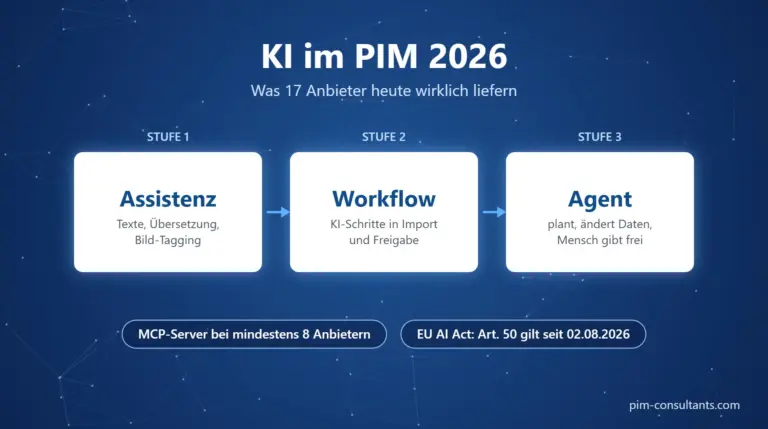
AI in PIM 2026: What vendors actually deliver today
Which AI capabilities PIM vendors actually deliver in 2026: an overview of agents, MCP servers, custom AI models and pricing across 17 vendors, plus obligations under the EU AI Act.

PIM and MDM are often mentioned together and just as often confused. Both promise a central source of data, but they operate at different levels and solve different problems. Choose the wrong system, and you end up with either an oversized project or a solution that does not help marketing and sales.
Put simply, PIM vs. MDM comes down to this: PIM is the specialist for product data. It enriches that data for marketing and sales and distributes it to online stores, marketplaces and catalogs. MDM is the generalist for all master data. It creates a consistent record not just for products, but also for customers, suppliers and locations.
A PIM system belongs in the hands of product management, marketing and e-commerce teams. Its strengths:
Enrichment: text, images, videos and attributes for marketing.
Adaptation: tailored data for each market, language and target audience.
Syndication: connections to online stores, marketplaces and print catalogs.
Collaboration: team approval workflows for product content.
An MDM system is a tool for company-wide data quality, often owned by IT or finance. Its strengths:
Multiple domains: customers, products, suppliers and locations in one system.
Unique records: no duplicate customers in CRM and ERP, with one valid version of each record.
Reporting and compliance: a reliable data foundation for analysis and regulatory requirements.
The decision depends on where your biggest pain points are today.
PIM is the right fit when product data is inconsistent, launching new products takes too long and online channels are not reliably supplied with data.
MDM is the right fit when customer and supplier data diverges across ERP, CRM and the supply chain, leading to errors in orders and reports.
Many large enterprises use both. MDM provides the core product record, such as the global item number and legal product name. PIM takes that record, enriches it for marketing and sales, and publishes it.
PIM and MDM are not mutually exclusive; they serve different purposes. PIM delivers well-prepared product data to your channels quickly. MDM ensures that all master data is consistent across the company. For most companies facing challenges in e-commerce and marketing, PIM is the more pragmatic first step.
A look at the vendors shows how different the two approaches are. Reltio and Stibo Systems are Master Data Management platforms that reconcile customer, supplier and product data across all systems. Akeneo and Plytix, by contrast, are dedicated PIM systems. ableX combines both.
Not sure whether your data challenge calls for PIM or MDM? Get in touch, and we will help define the scope of your project.
Further reading: Master Data Management in the PIM Wiki
Matthias Kant is Managing Director of Digitize! GmbH, the company behind PIM-Consultants. Previously, he worked in marketing for the independent aftermarket at Continental and as a project manager and partner at the Droege Group and KMC Marketing Consultants. Today, he provides vendor-neutral advice to manufacturers and retailers on PIM selection and PIM implementation. More about the team
News & Blog

Which AI capabilities PIM vendors actually deliver in 2026: an overview of agents, MCP servers, custom AI models and pricing across 17 vendors, plus obligations under the EU AI Act.

Has the Akeneo Community Edition been discontinued? No. Support for Akeneo 7 On-Premise and PaaS ended on 30 September 2026. Here are the facts and the five options now available to Enterprise customers.
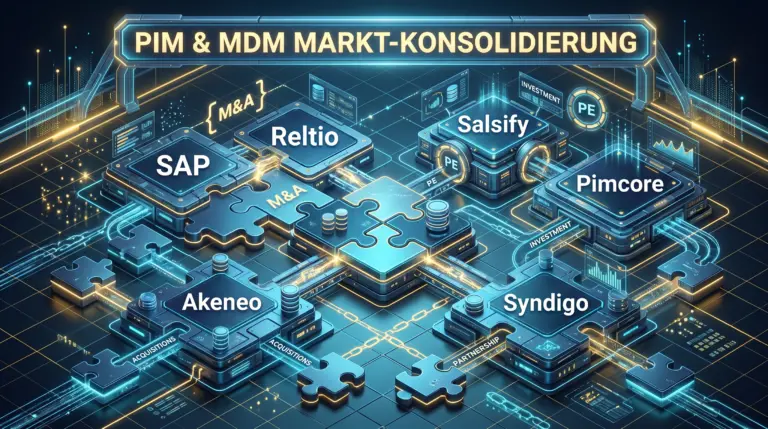
Cinven buys Salsify, Tenzing takes over Pimcore, Akeneo acquires PricingHUB: an overview of all PIM deals in 2025/2026, the three patterns behind them and what users should now look out for in their contracts.
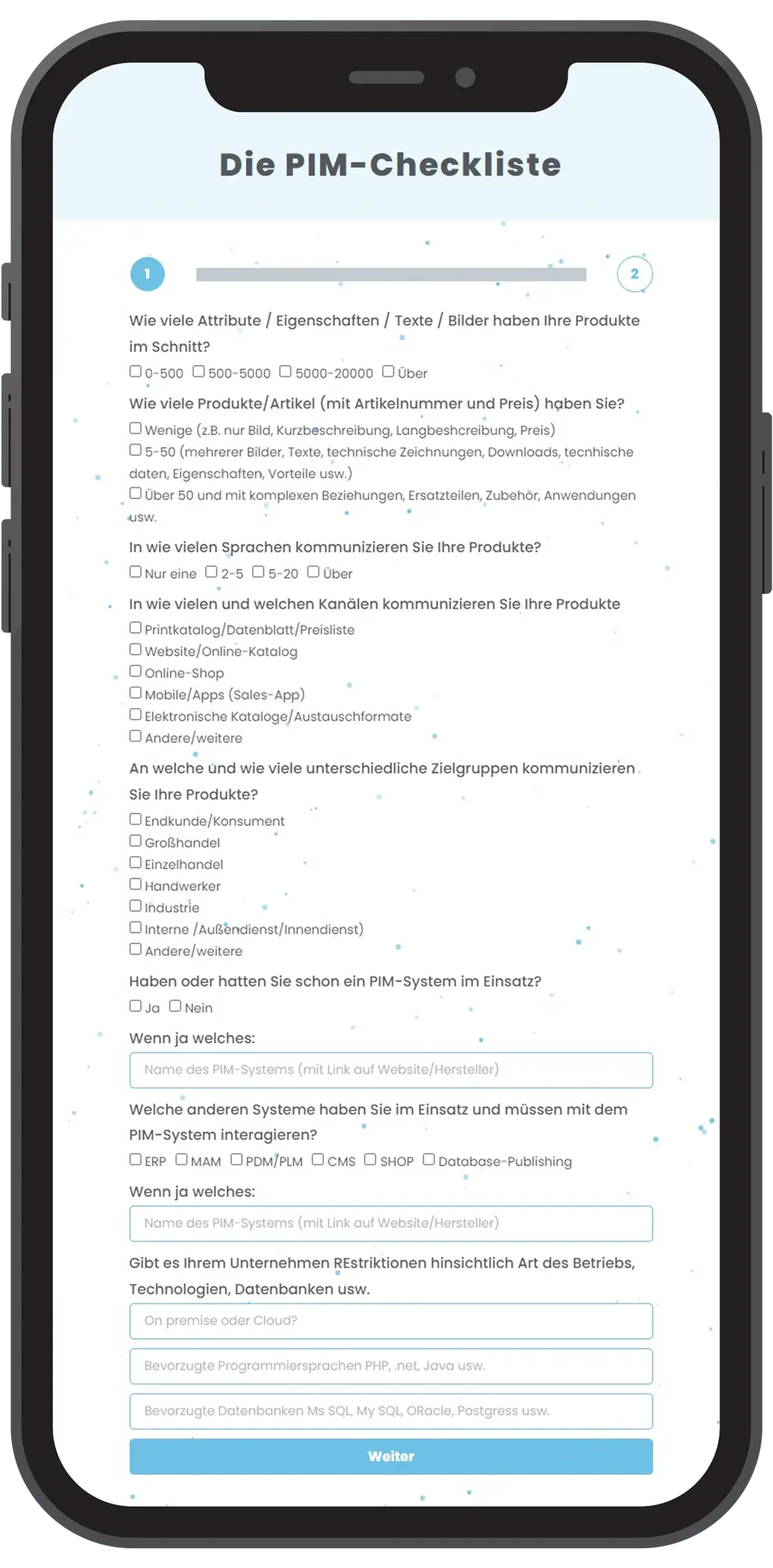
Find out in 3 minutes whether a PIM system could benefit your business and which PIM systems could be right for you!
Webdesign: Deutsche Stadtmarketing