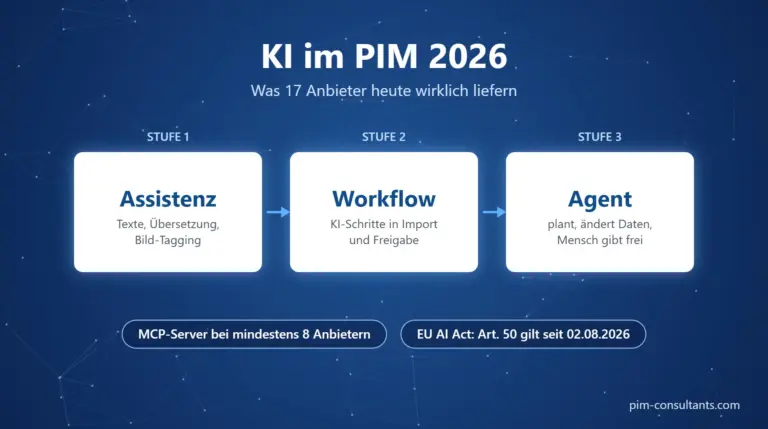
AI in PIM 2026: What vendors actually deliver today
Which AI capabilities PIM vendors actually deliver in 2026: an overview of agents, MCP servers, custom AI models and pricing across 17 vendors, plus obligations under the EU AI Act.

Many companies have implemented PIM in recent years to get their product data under control: a single source, fewer errors and less manual work. But anyone selling online today knows that accurate data alone does not drive a purchase. This is where Product Experience Management, or PXM, comes in.
The difference between PIM and PXM is straightforward: PIM collects, validates and keeps data consistent. PXM uses this data to present products compellingly for each channel and target audience. PIM manages information; PXM shapes how customers experience it.
Perspective. PIM looks inward, improving data quality and processes. PXM looks outward, asking how customers experience the data at a particular touchpoint.
Content. PIM manages structured data such as item numbers, attributes, dimensions and prices. PXM adds stories, reviews, videos and images, often through an integrated DAM system.
Goal. PIM ensures consistent, accurate data across all channels. PXM aims to capture attention and drive purchases, deliberately adapting the presentation: technical tables in a B2B portal, a short story on Instagram.
1. Get your PIM foundation right. There is no PXM without reliable core data. The underlying data must be complete and accurate before you build experiences on it.
2. Define your touchpoints. What information does a customer need in the app, on the website or on a marketplace? The PIM system must be able to deliver data differently for each channel.
3. Integrate images and videos. A product experience is primarily visual. The most important technical step towards PXM is therefore to connect a DAM system to your PIM, so that images, videos and 360-degree views are automatically assigned to the right product.
“59% of consumers have returned a product because its online description was misleading or inaccurate.”
Akeneo, Verbraucherumfrage 2025
Implementing PIM means laying the foundation. PXM means using that foundation to present products in a way that drives purchases. The two go hand in hand: PIM provides the facts, while PXM ensures they resonate with customers. Vendors such as Salsify and Contentserv combine both in a single platform.
Want to get more from your product data? Get in touch.
Further reading: Salsify (PXM) · Customer Experience in the PIM Wiki · PIM and Customer Experience
Matthias Kant is Managing Director of Digitize! GmbH, the company behind PIM-Consultants. He previously worked in marketing for the independent aftermarket at Continental and as a project manager and partner at the Droege Group and KMC Marketing Consultants. Today, he provides manufacturers and retailers with vendor-independent advice on selecting and implementing PIM systems. More about the team
News & Blog

Which AI capabilities PIM vendors actually deliver in 2026: an overview of agents, MCP servers, custom AI models and pricing across 17 vendors, plus obligations under the EU AI Act.

Has the Akeneo Community Edition been discontinued? No. Support for Akeneo 7 On-Premise and PaaS ended on 30 September 2026. Here are the facts and the five options now available to Enterprise customers.
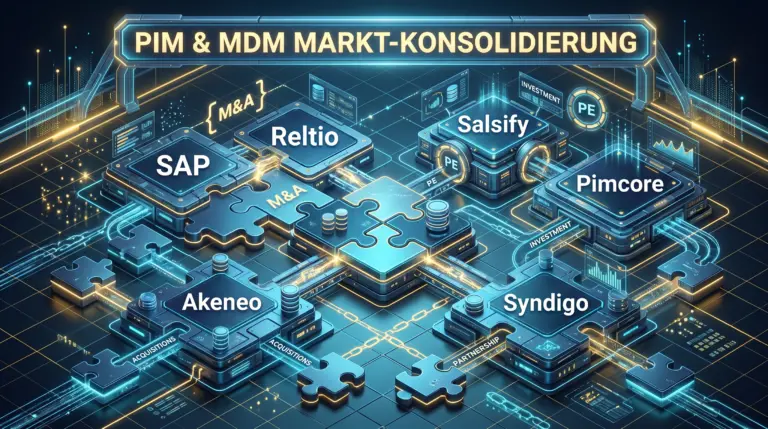
Cinven buys Salsify, Tenzing takes over Pimcore, Akeneo acquires PricingHUB: an overview of all PIM deals in 2025/2026, the three patterns behind them and what users should now look out for in their contracts.
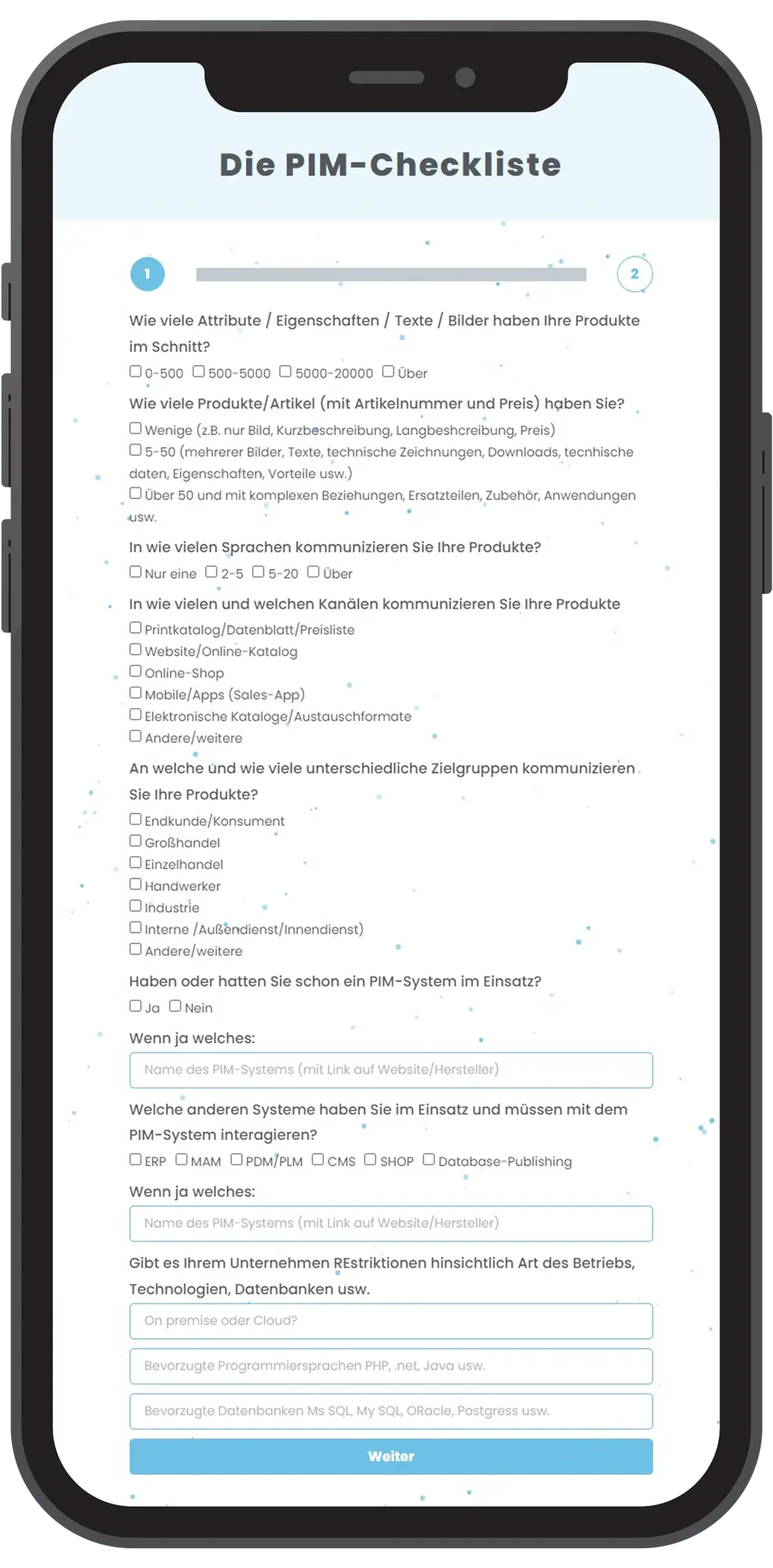
Find out in 3 minutes whether a PIM system could benefit your business and which PIM systems could be right for you!
Webdesign: Deutsche Stadtmarketing