Headless Commerce: Why PIM Is Essential

Headless Commerce and PIM

Headless Commerce: Why PIM Provides the Data Foundation

Headless commerce separates what customers see from the system behind it. The online store, app or in-store display retrieves its content through APIs. This provides flexibility: products can appear in social media feeds, on marketplaces, in apps or through voice assistants without building a separate system for each channel.

But this only works if product data is also available through APIs. Building a modern frontend while continuing to maintain data in a rigid commerce platform wastes that advantage. That is why PIM is the central data source for headless commerce. It delivers structured product data to every channel through APIs.

What a PIM Must Deliver for Headless Commerce

APIs first. In the past, many PIM systems exported their data once a night as a CSV file. A PIM for headless commerce provides text, attributes and media links through an API, usually in JSON format. The frontend requests a product and immediately receives up-to-date data.

Channel-neutral data. In a traditional online store, data is often maintained to fit the layout. Headless commerce requires granular, neutral data, such as care instructions in a separate field rather than buried in body text. Only then can a smartwatch display the instructions alone while the online store shows the full text.

Fast delivery. Headless frontends are built for speed. If they have to wait for slow queries to a legacy ERP, that advantage disappears. PIM systems with a well-designed API and caching deliver product data quickly.

Graphic: Headless commerce with PIM as the central data source

What to Look for in a PIM for a Headless Setup

Check the API. Not every PIM API is built for live queries from an online store. During selection, establish whether it responds quickly under load or is only intended for imports.

Think in building blocks. In composable commerce, PIM is one component among many. The price comes from a pricing service, the image from the DAM, the text from the PIM, and the frontend brings everything together. Ease of integration is therefore the most important criterion when selecting a PIM.

Write channel-neutral copy. Phrases such as “click below” make no sense on a voice assistant or in a catalogue. Write for the product, not for a specific page.

“Companies taking a composable approach implement new features 80% faster than their competitors.”

Conclusion

Headless commerce is the answer to the growing number of channels. To ensure that frontend flexibility does not create extra work behind the scenes, you need a central data source with a well-designed API. That is exactly what a PIM provides. It frees product data from the legacy commerce platform and makes it usable on any device.

Planning a move to a headless or composable architecture? Get in touch and we will assess whether your data model is ready.

More on this topic: Bluestone PIM (MACH) · BetterCommerce · The Evolution of PIM: Two Routes to the Goal

About the Author

Matthias Kant is Managing Director of Digitize! GmbH, the company behind PIM-Consultants. Previously, he worked in marketing for the Independent Aftermarket at Continental and as a project manager and partner at the Droege Group and KMC Marketing Consultants. Today, he provides independent advice to manufacturers and retailers on PIM selection and implementation. More about the team

Share this post

More PIM Insights

News & Blog

Any questions?

We are happy to advise you.

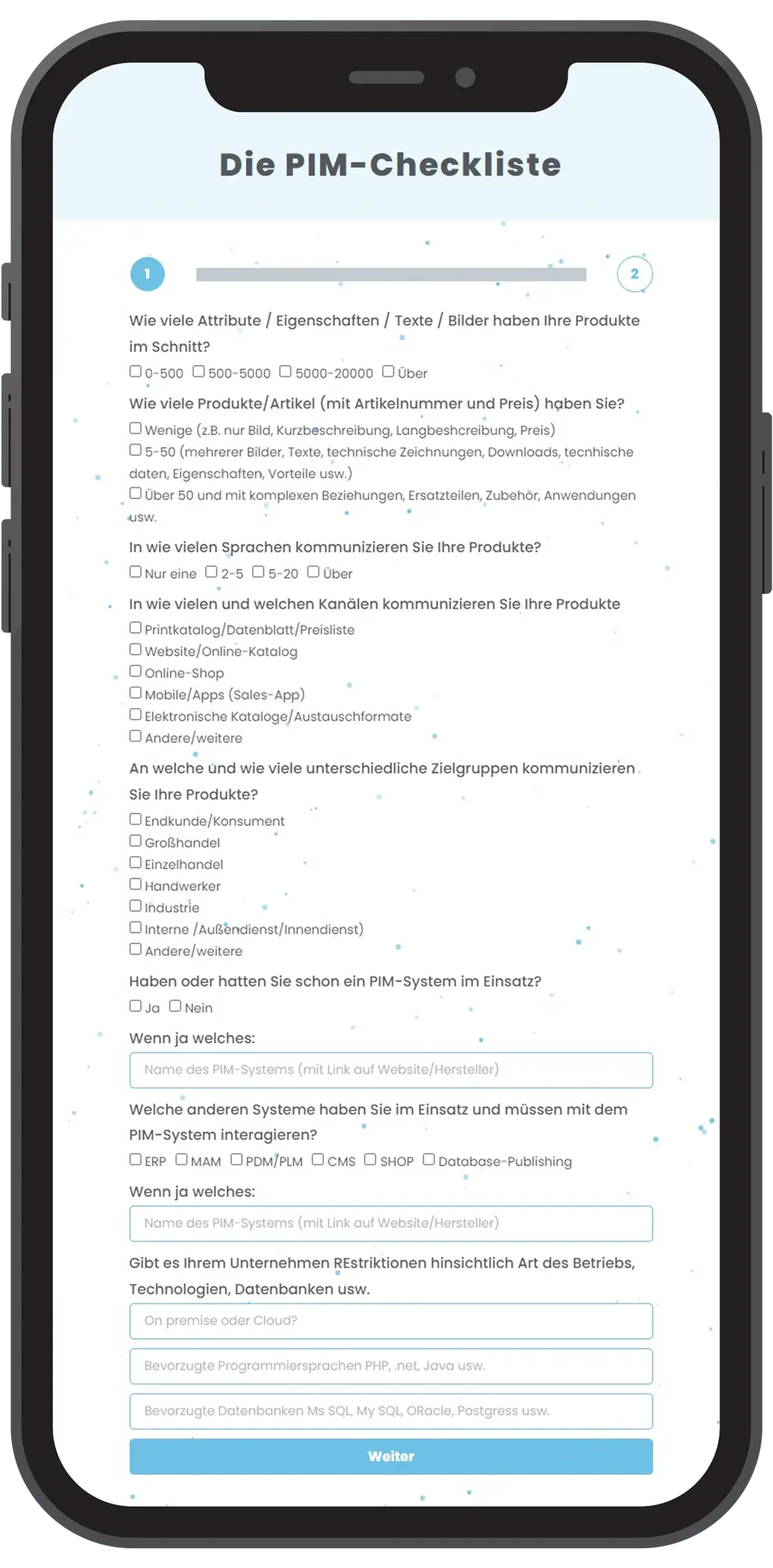
Wait! Have you seen our PIM checklist?

Find out in 3 minutes whether a PIM system could benefit your business and which PIM systems could be right for you!

Webdesign: Deutsche Stadtmarketing