
- General
PIM consulting: What a consultant does and when it pays off
A manufacturer sells through specialist retailers, its own online shop and a marketplace. The same items have different names in each channel, images are stored in three different locations, and the catalogue is compiled manually every spring. At some point, the conclusion is clear: we need a PIM system. Soon afterwards comes the harder question: can we select it ourselves, and if not, what does PIM consulting actually deliver? The short answer: a PIM consultant bridges the gap between your business teams and the software market. They ensure that requirements are prioritised before you meet a vendor, that the shortlist is built on clear reasoning, and that the team ultimately signs a proposal with a full understanding of its implications. What they are not: a vendor representative.
Our service overview shows how we put this into practice as a vendor-neutral PIM consulting firm.
What PIM consulting actually delivers
The tasks align with the stages of a selection process:
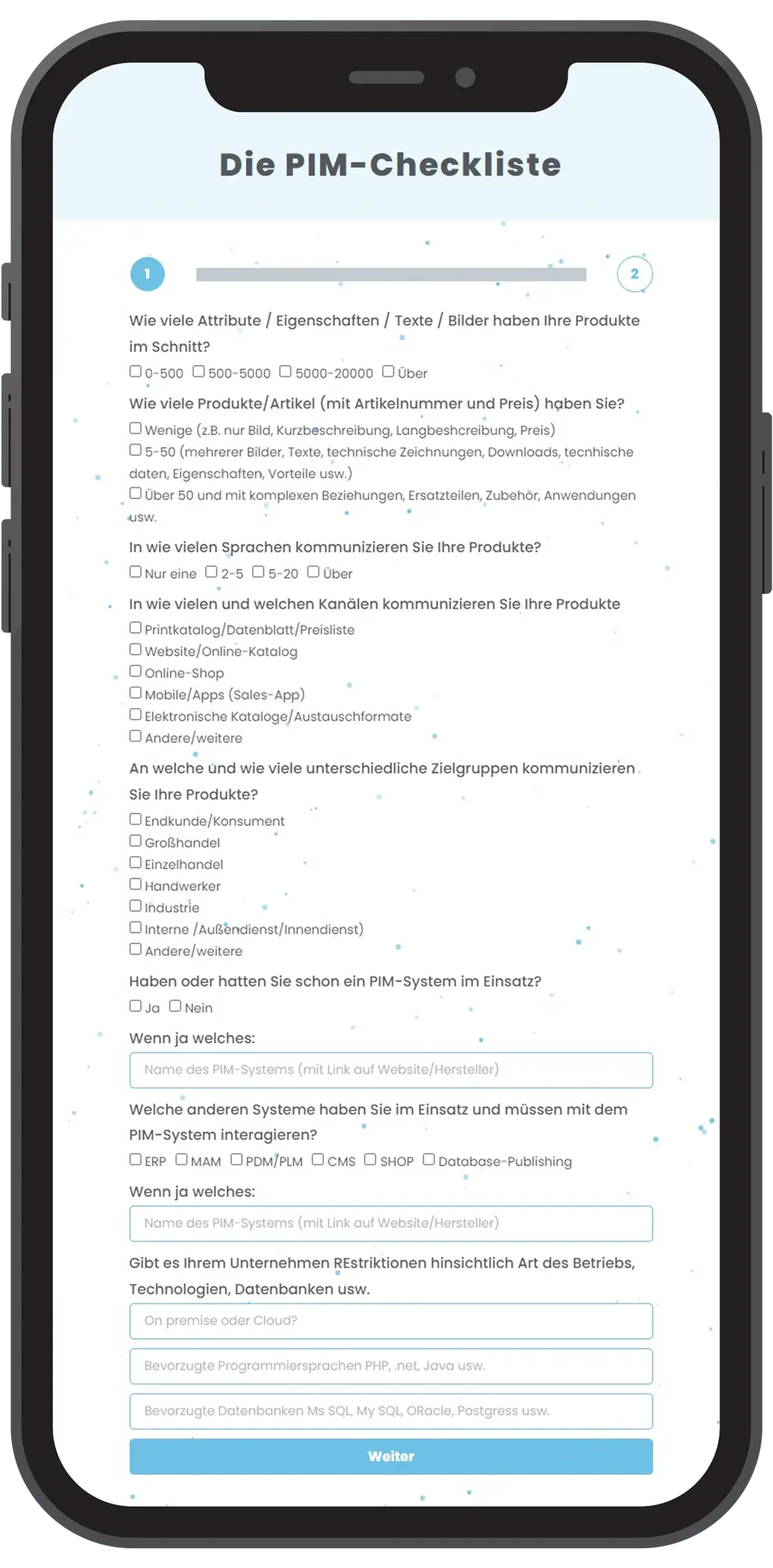
- Gathering and prioritising requirements. Working with the core team, a comprehensive checklist becomes a tailored requirements matrix: adding business requirements, incorporating soft factors and weighting sections against each other. The consultant guides this process but does not make the assessments alone.
- Knowing the market. Knowledge of vendors, their integrators and partners, and the typical course of comparable projects is central to external support. It saves the months a team would otherwise spend simply discovering what is available on the market.
- Facilitating workshops. One vendor workshop per day, structured around the requirements matrix. Afterwards, the core team assesses functionality and, separately, its personal impressions of the vendor. Facilitation also means ensuring that the assessment is based on the matrix, not on how polished that day’s presentation was.
- Making proposals comparable. Proposals are turned into a decision matrix comparing licences, third-party licences, customisation, services and maintenance side by side, including clearly justified upward or downward adjustments where proposals leave gaps.
- Providing support through to integration. Consulting does not end at the signature. Existing systems, including ERP, MDM and DAM, must be considered in the requirements, not as an afterthought once interfaces have already become expensive.
What independent PIM consulting does not do
Independent PIM consultants do not sell software. This is not modesty but a prerequisite: anyone who earns money from a vendor can no longer facilitate the weighting process impartially. There is a second boundary: consultants can prepare and support decisions, but cannot make them for you. The core team carries out the functional assessment itself, and its personal impressions of the vendors should not be delegated either. If a consultant takes over both, it is fair to ask: whose interests does the selection ultimately serve?
Three situations where external support helps
First implementation. The company has no internal benchmark, no one who has built a requirements matrix for product data before. The selection process can be learned, but not as a side task alongside day-to-day business.
External drivers. An ERP migration, a new online shop, a new sales channel or requirements such as the Digital Product Passport set a deadline. When time is tight, there is no room to explore the vendor landscape at leisure. That market knowledge is precisely what you bring in.
An established team, an unfamiliar market. The business teams know what they need. What they lack is knowledge of vendors, their integrators and how they structure their pricing. This is the classic gap, and the only one of these three situations that cannot be resolved through learning on the job.
How to identify the right consultant
Four questions are enough for an initial assessment:
- Who actually facilitates the workshops? Will the consultants who attended the pitch also lead the workshops, or will a project team turn up that you have never met before?
- How independent is the recommendation? An independent consultancy earns its income from daily rates, not licences. Still, ask directly about any other remuneration, including arrangements with vendors or integrators.
- Does the consultant understand your sales model? A wholesale project differs from a direct sales project. Their references should match your sales structure.
- Can they acknowledge limitations? If nothing could possibly go wrong at the first meeting, the experience you think you are paying for is missing.
Conclusion: You pay for clarity before the decision
No consultancy can make the decision for you, nor should it: that responsibility remains with the company. What you pay for is the groundwork: weighting based on your own business, a shortlist with defensible reasons for exclusions, and vendor workshops structured around your requirements. Our article on PIM selection explains this process in detail. A brief initial conversation is often enough to establish whether external support would help in your situation. PIM-Consultants offers a free initial consultation for this purpose. Send your enquiry via the contact page.

AI in PIM 2026: What vendors actually deliver today
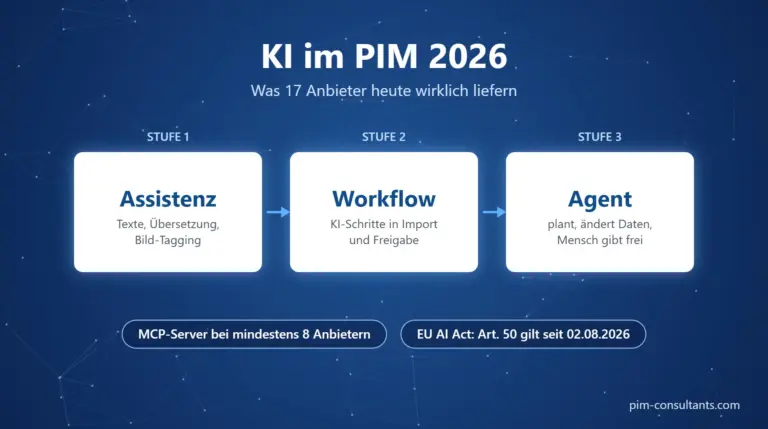
Which AI capabilities PIM vendors actually deliver in 2026: an overview of agents, MCP servers, custom AI models and pricing across 17 vendors, plus obligations under the EU AI Act.
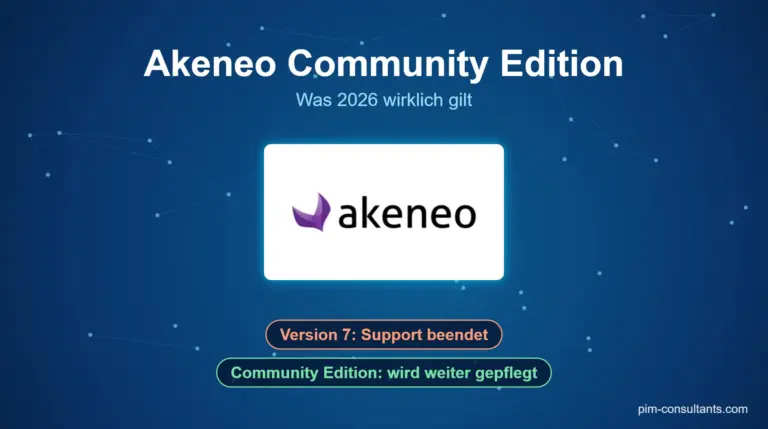
Akeneo Community Edition 2026: Not discontinued, but changing
Has the Akeneo Community Edition been discontinued? No. Support for Akeneo 7 On-Premise and PaaS ended on 30 September 2026. Here are the facts and the five options now available to Enterprise customers.
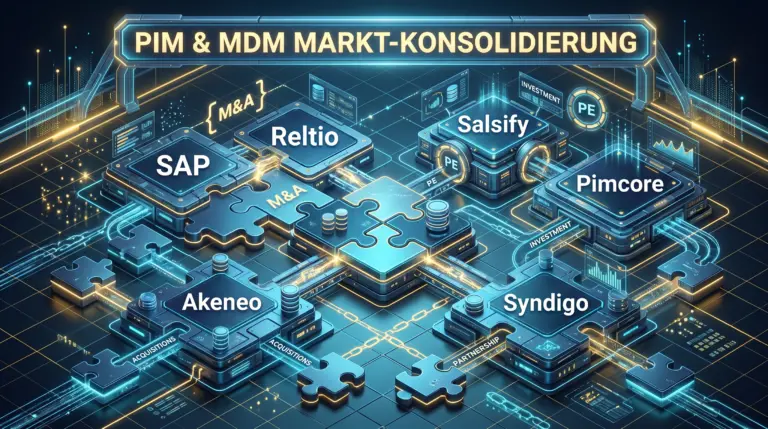
Billion-Dollar Deals, Private Equity and Platform Mergers: The Comprehensive PIM Consolidation Report 2026
Cinven buys Salsify, Tenzing takes over Pimcore, Akeneo acquires PricingHUB: an overview of all PIM deals in 2025/2026, the three patterns behind them and what users should now look out for in their contracts.
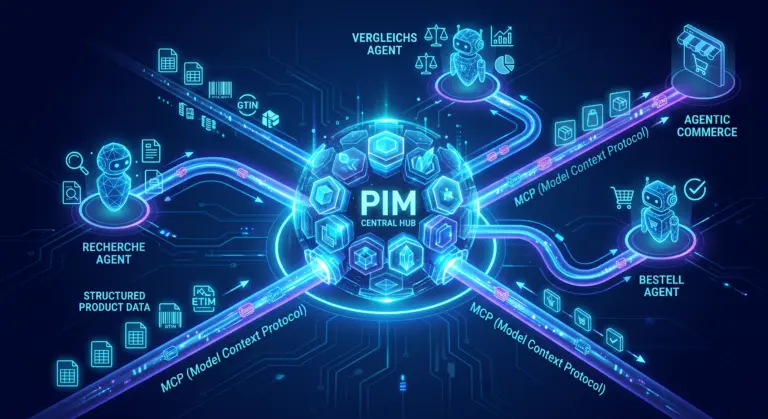
Beyond Chatbots: How Model Context Protocol (MCP) and Agentic Commerce Turn PIM into the Nervous System
AI agents read product data, not product pages. How the Model Context Protocol (MCP) works, which PIM vendors already offer MCP servers, and how to prepare your data model and governance.
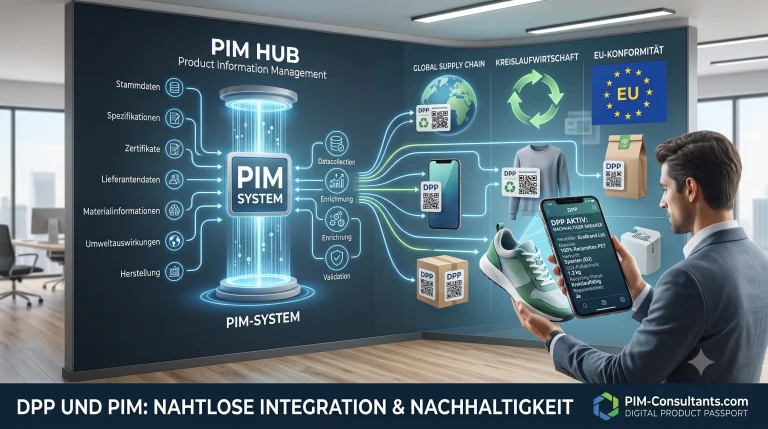
Digital Product Passport (DPP) & PIM: A Strategic Guide
How do you prepare your PIM for the Digital Product Passport? Learn how robust data governance and GS1 standards help you meet EU requirements.
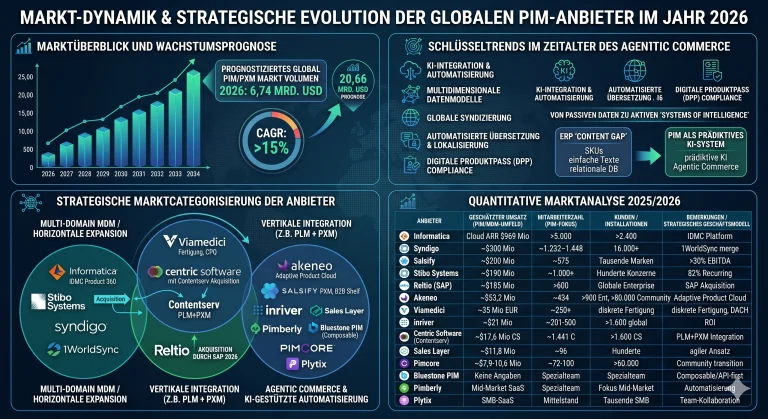
PIM Vendors: Evolution, AI & Strategy
In recent years, PIM has evolved from an administrative necessity into one of the most business-critical strategic disciplines in the digital economy.