PIM Meets AI: How Artificial Intelligence Is Revolutionising Automated Product Enrichment

AI in PIM

AI in PIM: Automated Product Enrichment

Enriching product data takes time. Product managers assign attributes, write copy and tag images, often for thousands of items and in multiple languages. A PIM system provides the structure, but much of the actual work is still done manually.

AI in PIM is now making a real difference. AI models take on tasks that previously required content editors: they suggest categories, turn technical attributes into copy and identify what a product image shows. Many PIM vendors now offer these capabilities, including ATAMYA and Viamedici.

Three Applications for AI in PIM

Suggest categories and attributes. An AI model analyses a product image or a short supplier description. It identifies whether a shirt has long or short sleeves, determines its colour and assigns the product to the right category. This saves considerable time when onboarding new items.

Generate copy from attributes. Generative AI creates product copy from attributes held in the PIM, such as material, fit and colour. The tone can be factual or promotional, depending on the channel. Particularly for large product ranges, this produces a first draft that an editor simply needs to review.

Tag images automatically. Image recognition identifies not just the product, but also details such as a V-neck or a zip. The tags are stored in the PIM or DAM, improving internal search and online shop filters.

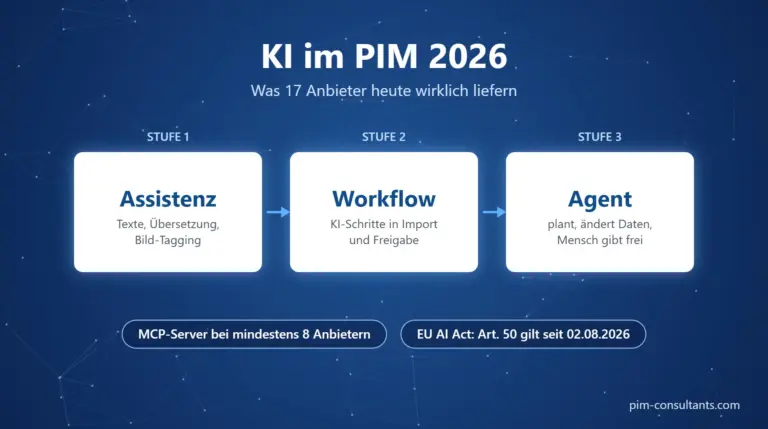
Graphic: AI in PIM for Product Enrichment

In Practice: Three Steps to AI in PIM

Let people and AI work together. AI makes suggestions; a person reviews and approves them. The PIM should include this approval step in the workflow so that no copy goes live without being checked.

Ensure clean data. AI is only as good as the data it works with. Complete, well-structured data in the PIM is essential for results that fit your product range and tone of voice.

Start small. Begin with a clearly defined task, such as assigning colours or translating simple technical specifications. Once that works, move on to the next task.

“73% of consumers cannot find all the product information they need to make a confident purchase decision.”

Conclusion

AI in PIM is no longer a distant prospect. It addresses exactly where the most time is lost today: enriching product data. PIM provides structure and data quality; AI handles routine tasks. Combining the two gets products onto your channels faster, with better descriptions.

Want to know where AI could add the most value to your product data processes? Get in touch.

Related reading: Generative AI and AI Agents in PIM · Model Context Protocol (MCP) · ATAMYA: AI Capabilities in PIM

About the Author

Matthias Kant is Managing Director of Digitize! GmbH, the company behind PIM-Consultants. He previously worked in marketing for the independent aftermarket at Continental and as a project manager and partner at the Droege Group and KMC Marketing Consultants. Today, he provides vendor-neutral guidance to manufacturers and retailers on PIM selection and implementation. More about the team

Share this post

More PIM Insights

News & Blog

Have any questions?

We’re happy to advise you.

Wait! Have you seen our PIM checklist?

Find out in 3 minutes whether a PIM system could benefit your business and which PIM systems could be right for you!

Webdesign: Deutsche Stadtmarketing