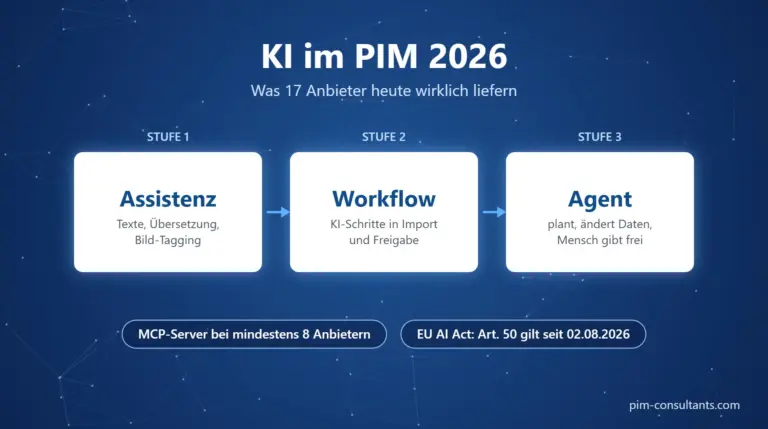
AI in PIM 2026: What vendors actually deliver today
Which AI capabilities PIM vendors actually deliver in 2026: an overview of agents, MCP servers, custom AI models and pricing across 17 vendors, plus obligations under the EU AI Act.
Which AI capabilities PIM vendors actually deliver in 2026: an overview of agents, MCP servers, custom AI models and pricing across 17 vendors, plus obligations under the EU AI Act.
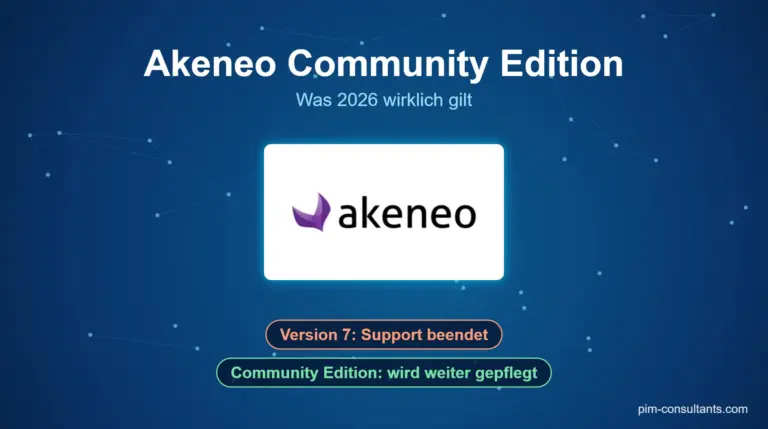
Has the Akeneo Community Edition been discontinued? No. Support for Akeneo 7 On-Premise and PaaS ended on 30 September 2026. Here are the facts and the five options now available to Enterprise customers.
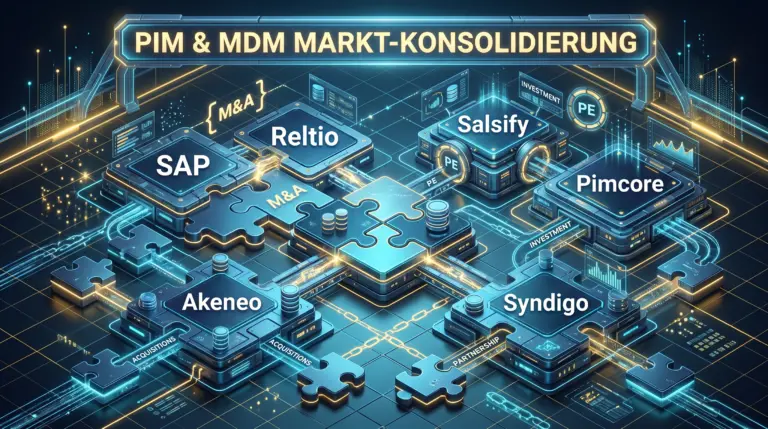
Cinven buys Salsify, Tenzing takes over Pimcore, Akeneo acquires PricingHUB: an overview of all PIM deals in 2025/2026, the three patterns behind them and what users should now look out for in their contracts.
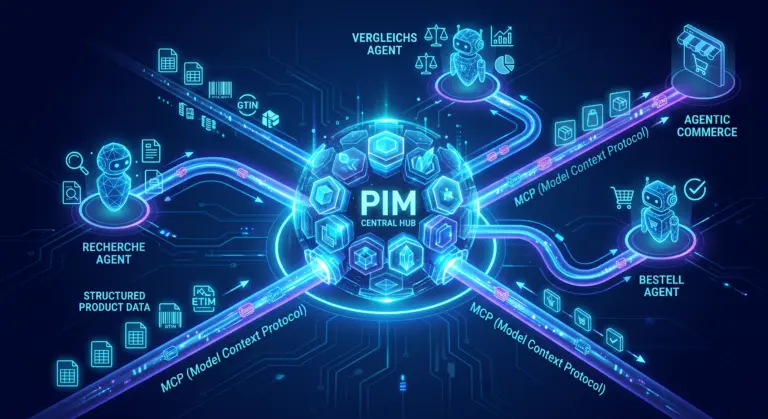
AI agents read product data, not product pages. How the Model Context Protocol (MCP) works, which PIM vendors already offer MCP servers, and how to prepare your data model and governance.
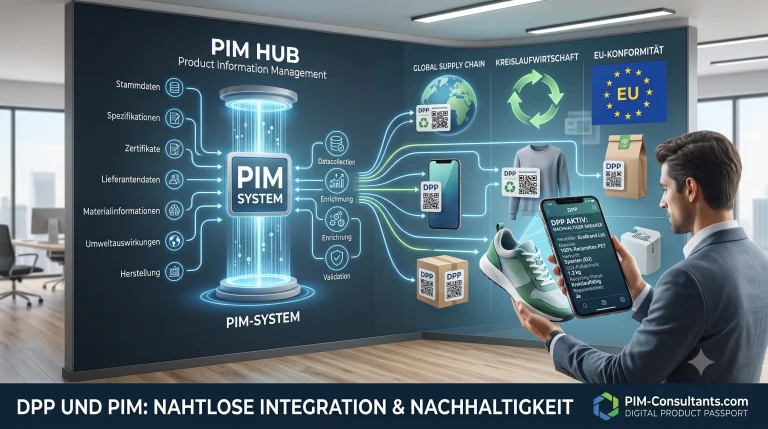
How do you prepare your PIM for the Digital Product Passport? Learn how robust data governance and GS1 standards help you meet EU requirements.
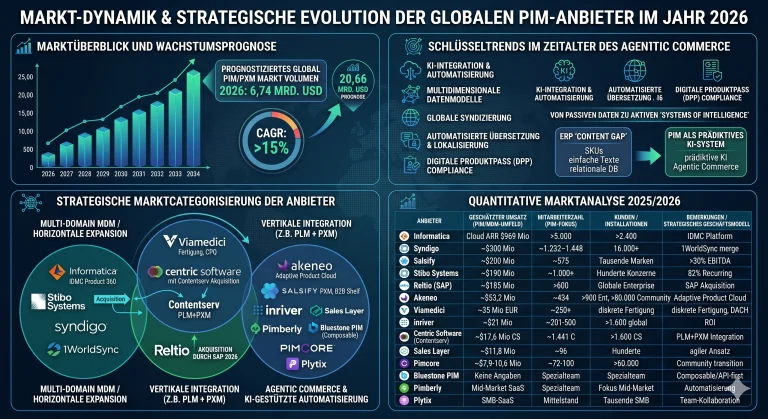
In recent years, PIM has evolved from an administrative necessity into one of the most business-critical strategic disciplines in the digital economy.
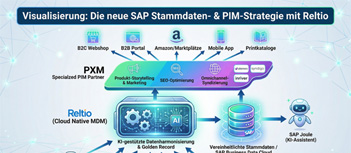
The strategic realignment of the world’s leading PIM vendors in the age of agentic artificial intelligence, illustrated by SAP’s acquisition of Reltio.

The landscape of enterprise software for managing product information (PIM), master data (MDM), digital assets (DAM) and content

End the Excel back-and-forth: A PIM with a supplier portal automates data imports, ensures quality at the source and significantly reduces manual work for your procurement team.
Webdesign: Deutsche Stadtmarketing